
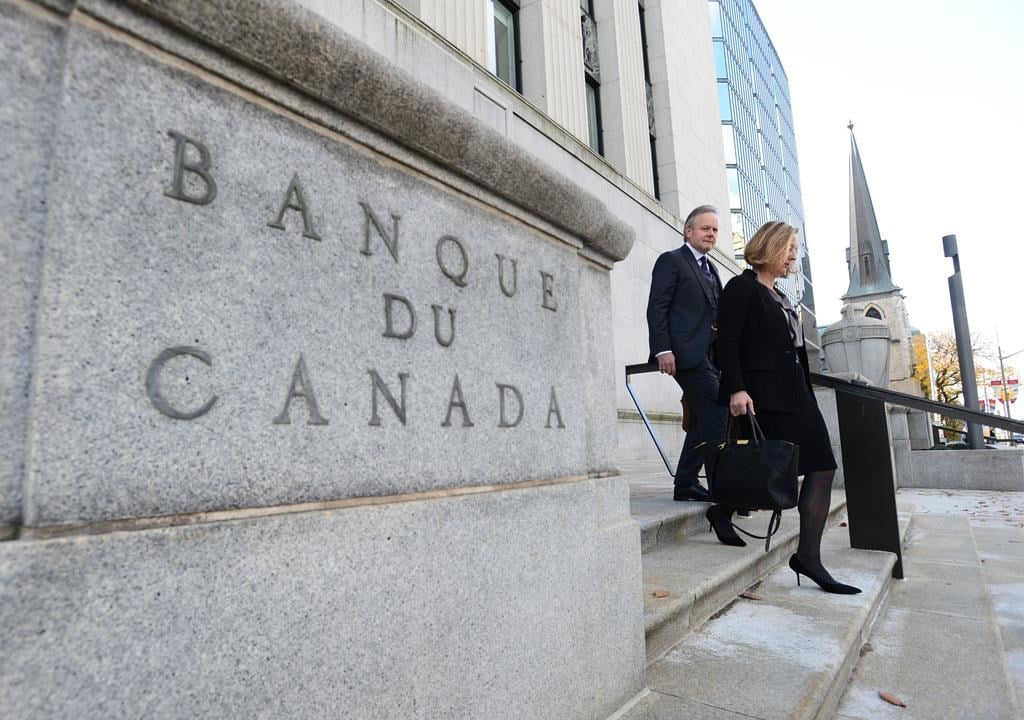
Canada’s central bank has raised interest rates for the first time in a year, bringing its benchmark rate to 2.5% as concerns grow over persistent inflation and rising energy prices.
The Bank of Canada announced a 0.25 percentage-point increase to its policy interest rate on October 28, 2026, raising it from 2.25% to 2.5%.
Governor Tiff Macklem said the decision was necessary to reduce the risk of higher global oil prices spreading into other parts of the Canadian economy.
The move comes after Canada’s annual inflation rate climbed to 3.1% in September, largely driven by rising energy prices linked to the ongoing conflict in the Middle East.
For Canadian homeowners, mortgage holders and prospective buyers, the decision raises new questions about borrowing costs and the direction of the housing market.
Why Did the Bank of Canada Raise Interest Rates?
According to Macklem, the central bank is concerned that rising energy costs could eventually push up prices across a much wider range of goods and services.
Higher oil prices can increase transportation, manufacturing and distribution costs, which businesses may eventually pass along to consumers.
The Bank of Canada is attempting to prevent these pressures from becoming more persistent.
Macklem acknowledged the challenges facing the Canadian economy but argued that interest rates remain low enough to support economic growth.
He said the increase should help return inflation to the central bank’s 2% target more quickly.
Canada’s Inflation Rate Has Climbed to 3.1%
Canada’s annual inflation rate reached 3.1% in September 2026, exceeding the Bank of Canada’s 2% target.
Rising global energy prices have been a major contributor to the increase.
However, the central bank’s concern extends beyond gasoline and energy bills.
If higher energy costs continue to affect transportation, food production and other industries, inflation could become more widespread.
The latest interest rate increase is intended to reduce that risk.
What Does the Rate Hike Mean for Canadian Mortgages?
The increase could have immediate implications for some Canadian homeowners.
Variable-rate mortgages: Borrowers with variable-rate mortgages may see their interest costs rise. Depending on the mortgage agreement, this could mean higher payments or a larger portion of existing payments going toward interest.
Fixed-rate mortgages: Homeowners with existing fixed-rate mortgages generally won’t experience an immediate change in their payments. However, borrowers approaching renewal could face different rates depending on current bond yields and lender pricing.
Home equity lines of credit: HELOCs typically have variable interest rates linked to lenders’ prime rates, meaning borrowing costs could increase if lenders adjust their rates.
For example, a 0.25 percentage-point increase represents approximately $250 in additional annual interest on a $100,000 balance, assuming the entire balance is outstanding for a full year and the rate increase is passed through.
Actual mortgage payment changes depend on the loan structure and repayment terms.
What Does This Mean for Ontario’s Housing Market?
Higher borrowing costs could create additional challenges for Ontario’s housing market, particularly in expensive regions such as Toronto and the Greater Toronto Area.
Even a relatively small interest rate increase can affect mortgage qualification, purchasing power and monthly housing costs.
Potential buyers may find that higher borrowing costs reduce the amount they can comfortably afford.
Meanwhile, sellers could face more cautious buyers if financing becomes increasingly expensive.
However, the impact will depend on several factors, including mortgage rates, housing inventory, employment conditions and consumer confidence.
A single quarter-point increase does not necessarily mean home prices will decline.
The Bank of Canada Faces a Difficult Balancing Act
The latest decision highlights the challenge facing Canadian policymakers.
On one hand, inflation remains above the central bank’s target, and rising energy prices threaten to create additional pressure.
On the other hand, Canada’s labour market is already experiencing weakness, and higher interest rates could further slow economic activity.
Macklem has acknowledged these competing risks.
The central bank must now determine whether the latest increase will be sufficient to contain inflation without placing excessive pressure on households and businesses.
Will Canada See More Interest Rate Hikes?
The Bank of Canada’s latest decision does not guarantee additional increases.
Future decisions will depend on inflation, economic growth, employment and the extent to which higher energy prices spread throughout the economy.
For Canadians planning to purchase a home, renew a mortgage or borrow against their property, upcoming inflation reports and Bank of Canada announcements will be particularly important.
The bottom line: Canada’s benchmark interest rate has increased to 2.5%, marking a shift in monetary policy as the central bank attempts to contain inflation while supporting an already fragile economy.
For Ontario’s housing market, the immediate concern is whether higher borrowing costs will further weaken buyer demand and affordability.
References
- Bank of Canada — Monetary Policy and Interest Rate Announcements: https://www.bankofcanada.ca/core-functions/monetary-policy/key-interest-rate/
- Bank of Canada — Inflation: https://www.bankofcanada.ca/core-functions/monetary-policy/inflation/
- Statistics Canada — Consumer Price Index: https://www.statcan.gc.ca/en/subjects-start/prices_and_price_indexes/consumer_price_indexes
- CBC News — October 28, 2026 coverage of the Bank of Canada’s interest rate decision and Governor Tiff Macklem’s remarks.


Leave a Reply