
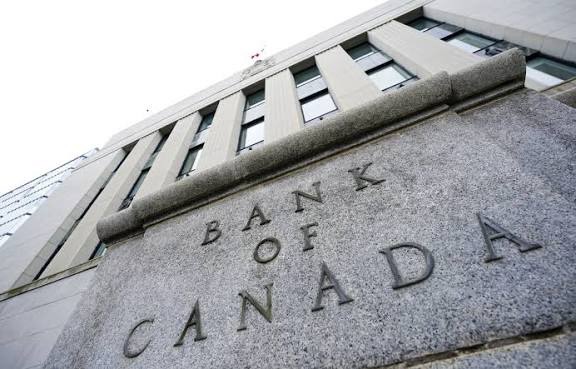
The Bank of Canada is preparing to announce its next interest rate decision on Wednesday, October 28, 2026, and Canadians could be facing higher borrowing costs.
After keeping its benchmark interest rate unchanged at 2.25% for nearly a year, the central bank is facing growing pressure to raise rates as inflation climbs.
According to a new Reuters survey, a majority of economists now expect the Bank of Canada to increase its key interest rate by 0.25 percentage points, bringing it to 2.50%.
However, not everyone agrees that a rate hike is necessary.
With inflation rising and Canada’s job market showing signs of weakness, the upcoming announcement could have important implications for homeowners, mortgage borrowers and the Canadian housing market.
When Is The Next Bank Of Canada Interest Rate Announcement?
The Bank of Canada’s next scheduled interest rate announcement is Wednesday, October 28, 2026, at 9:45 a.m. Eastern Time.
The central bank will also release its quarterly Monetary Policy Report, providing updated forecasts for inflation and economic growth.
Bank of Canada Governor Tiff Macklem and Senior Deputy Governor Carolyn Rogers are scheduled to hold a press conference at 10:30 a.m. Eastern.
The next scheduled announcement after October 28 will take place on December 9, 2026.
What Is Canada’s Current Interest Rate?
As of October 26, 2026, the Bank of Canada’s benchmark overnight interest rate is 2.25%.
The central bank last changed its policy rate on October 29, 2025, when it reduced the rate from 2.50% to 2.25%.
Since then, it has maintained the same rate through six consecutive announcements in 2026.
A quarter-point increase on October 28 would bring the overnight rate to 2.50%, marking the first Bank of Canada interest rate hike since July 2023.
What Are Economists Predicting For October 28?
Economists have become increasingly divided over whether the Bank of Canada should raise interest rates.
A Reuters survey conducted October 21–23 found that 19 of 34 economists, approximately 56%, expect a 0.25 percentage-point rate increase.
The remaining 15 economists expect the central bank to leave rates unchanged.
This represents a significant shift from earlier forecasts.
In the previous Reuters survey, approximately 80% of respondents expected the Bank of Canada to maintain its 2.25% rate through the end of 2026.
Now, rising inflation and concerns about future price increases have changed expectations.
The same Reuters survey found that 16 of 29 economists expect another interest rate increase by the end of March 2027, potentially bringing the overnight rate to 2.75%.
These are forecasts, not confirmed decisions.
Why Are Economists Expecting Interest Rates To Rise?
One of the biggest concerns is inflation.
Canada’s annual inflation rate increased to 3.1% in September 2026, up from 3.0% in August.
That puts inflation slightly above the Bank of Canada’s target range of 1% to 3%.
Higher energy prices have been a major contributor, with ongoing conflict in the Middle East increasing global oil prices.
Economists are concerned that sustained energy costs could eventually lead to broader price increases for transportation, groceries and other goods and services.
The Bank of Canada’s recent business and consumer surveys have also highlighted concerns about future inflation.
Governor Tiff Macklem has indicated that the central bank is prepared to adjust monetary policy if inflation becomes more persistent.
What Are Canada’s Major Banks And Economists Saying?
Several prominent economists have recently changed their interest rate forecasts.
Scotiabank: Predicting A Rate Hike
Derek Holt, Vice President and Head of Capital Markets Economics at Scotiabank, has forecast a 0.25 percentage-point increase at the October meeting.
His outlook reflects growing concerns that inflation pressures may require the Bank of Canada to begin tightening monetary policy.
BMO: Expecting A Hike Despite Economic Weakness
BMO Chief Economist Doug Porter has indicated that the Bank of Canada’s recent messaging points toward a rate increase.
However, Porter has also expressed reservations about raising borrowing costs while the Canadian economy remains weak.
BMO strategist Benjamin Reitzes has suggested policymakers may prefer to respond earlier to inflation rather than risk needing more aggressive increases later.
Desjardins: Inflation Expectations Are A Concern
Royce Mendes, Managing Director and Head of Macro Strategy at Desjardins, has highlighted the Bank of Canada’s recent business and consumer surveys.
The results suggest inflation expectations could become a more serious concern, helping explain why some economists have shifted toward forecasting a rate increase.
C.D. Howe Institute: Recommending No Change
Not all economists support an immediate hike.
On October 22, the C.D. Howe Institute’s Monetary Policy Council recommended keeping the overnight rate at 2.25% for the October announcement.
Six of the seven council members attending supported holding rates steady, while one favoured an increase.
The council recommended a more gradual approach, with rates reaching 2.50% by April 2027 and 2.75% by October 2027.
Its recommendation is independent and does not represent the Bank of Canada’s official position.
Canada’s Weak Job Market Is Complicating The Decision
Although inflation is creating pressure for higher interest rates, Canada’s labour market is showing signs of weakness.
The Canadian economy lost approximately 68,000 jobs in September 2026, while the unemployment rate increased to 6.5%.
A weaker job market makes interest rate increases more complicated.
Higher borrowing costs can reduce consumer spending, discourage business investment and place additional pressure on households already struggling with affordability.
This is one reason some economists believe the Bank of Canada should wait before raising rates.
What Would An Interest Rate Hike Mean For Canadian Mortgages?
If the Bank of Canada raises its overnight rate by 0.25 percentage points, some Canadian borrowers could face higher borrowing costs.
Variable-Rate Mortgages
Variable mortgage rates are generally influenced by lenders’ prime rates, which often move alongside changes to the Bank of Canada’s overnight rate.
If lenders increase their prime rates following a Bank of Canada hike, borrowers with variable-rate mortgages could see their payments increase or a larger portion of their existing payments go toward interest, depending on their mortgage terms.
Fixed-Rate Mortgages
Fixed mortgage rates are influenced more directly by government bond yields than by the Bank of Canada’s overnight rate.
As a result, a Bank of Canada rate increase does not automatically mean fixed mortgage rates will rise by the same amount.
However, expectations of future rate increases can influence bond yields and mortgage pricing.
Home Equity Lines Of Credit
Many home equity lines of credit are tied to lenders’ prime rates.
A rate increase could therefore make borrowing through a HELOC more expensive.
How Much Could A 0.25% Rate Hike Increase Mortgage Payments?
The impact depends on the outstanding mortgage balance, amortization period and mortgage structure.
For example, consider a homeowner with a $500,000 outstanding mortgage balance and 25 years remaining on their amortization.
If their mortgage rate increased from 4.00% to 4.25%, their monthly payment would increase by approximately $70, assuming a fully recalculated payment using standard Canadian mortgage calculations.
This is an illustrative example, not a forecast of mortgage rates.
Actual payment changes depend on the lender and mortgage agreement.
What Could Higher Interest Rates Mean For Canada’s Housing Market?
Higher interest rates can influence housing affordability, buyer demand and mortgage qualification.
For prospective homebuyers, rising borrowing costs can reduce purchasing power.
For existing homeowners, higher rates may create additional financial pressure, particularly for borrowers with variable-rate mortgages or those approaching renewal.
However, interest rates are only one factor influencing Canada’s housing market.
Employment conditions, housing supply, population changes and local economic activity also affect home prices and sales.
The impact of an interest rate increase could therefore vary considerably between markets such as Toronto, Vancouver, Calgary and Halifax.
Will The Bank Of Canada Raise Interest Rates Again In 2027?
Some economists are now forecasting additional increases in 2027.
The October Reuters survey found that a majority of respondents who answered the question expected another quarter-point increase by the end of March 2027.
Oxford Economics has also forecast a cumulative 0.50 percentage-point increase by January 2027.
However, the C.D. Howe Institute’s Monetary Policy Council has recommended waiting longer before raising rates.
The outlook will depend on inflation, employment, economic growth and how global energy prices evolve.
What Happens Next?
The Bank of Canada will announce its decision on Wednesday, October 28, at 9:45 a.m. Eastern Time.
Alongside the rate decision, Canadians will receive updated economic forecasts that could provide important clues about where interest rates are heading in 2027.
For homeowners and prospective buyers, the announcement could influence mortgage costs and housing affordability in the months ahead.
Whether the Bank of Canada raises rates or holds steady, the October decision will be closely watched across Canada’s real estate market.
References
- Bank of Canada. (2026). Interest Rate Announcement and Release of the Monetary Policy Report, October 28, 2026.
https://www.bankofcanada.ca/2026/10/fad-announcement-release-mpr-2026-10-28/ - Bank of Canada. (2026). Policy Interest Rate: Historical Rates and 2026 Schedule.
https://www.bankofcanada.ca/core-functions/monetary-policy/key-interest-rate/ - Reuters. (October 23, 2026). Bank of Canada to Raise Rates to 2.50% on October 28 and Once Again by End-March: Reuters Poll.
https://www.reuters.com/world/americas/bank-canada-raise-rates-250-october-28-once-again-by-end-march-2026-10-23/ - Reuters. (October 26, 2026). Bank of Canada Expected to Hike Rate on Wednesday to Stem Spillover of Energy Inflation.
https://uk.marketscreener.com/news/bank-of-canada-expected-to-hike-rate-on-wednesday-to-stem-spillover-of-energy-inflation-ce785cdcd881f521 - C.D. Howe Institute. (October 22, 2026). Monetary Policy Council Recommendation for October 2026.
https://cdhowe.org/publication/mpcoct2026/ - Global News. (October 21, 2026). Bank of Canada Expected to Raise Rates Next Week, Some Economists Say.
https://globalnews.ca/news/12110926/bank-of-canada-rate-hikes/ - Bank of Canada. (October 19, 2026). Business Outlook Survey and Canadian Survey of Consumer Expectations, Third Quarter 2026.
https://www.bankofcanada.ca/
Editorial note: This article reflects information available October 26, 2026. Economist forecasts are subject to change, and the October 28 interest rate decision has not yet been announced.


Leave a Reply