
Tag: economics
-
These Ontario Housing Markets Have Seen Some Of Canada’s Biggest Price Drops

Home prices are still falling across several Ontario housing markets, and some cities are now seeing among the biggest year-over-year price declines in Canada. New data from the Teranet-National Bank House Price Index shows home prices fell from a year earlier in several major Ontario markets in August 2026, with declines approaching 9% in some…
-
The Bank Of Canada Just Warned Interest Rates Could Go Up More Than Once
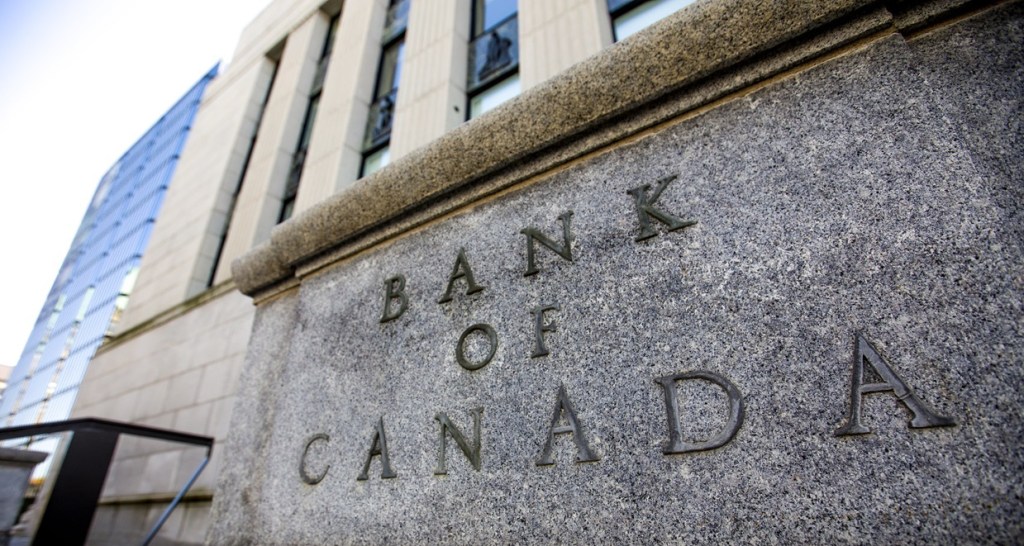
Canadians who have been waiting for interest rates to fall could be in for a surprise, because the Bank of Canada is now warning that rates may need to go up again. The Bank of Canada held its policy interest rate at 2.25% on September 2, keeping it unchanged for another meeting. But what Governor…
-
Bank of Canada Expected To Hold Rates This Week. Here’s What It Means For Ontario Homebuyers
All eyes will be on the Bank of Canada this Wednesday as policymakers announce their latest interest rate decision, a move that could influence mortgage rates, homebuyer confidence, and the direction of Ontario’s housing market. While many prospective buyers have been hoping for another rate cut, economists overwhelmingly expect the central bank to leave its…
-
A $50K Salary In 1980 Could Be Equivalent To Roughly $250K Today

A growing conversation around affordability and generational wealth is gaining attention online after comparisons showed how far a middle-class salary once stretched compared to today. According to inflation calculators and historical economic data, a $50,000 salary in 1980 could be roughly equivalent to earning around $250,000 annually today depending on the inflation measure used. The…
-
Canada’s Federal Debt Could Reach $2.9 Trillion by 2030

Canada’s federal debt is projected to reach nearly $2.9 trillion by 2030, according to a new analysis highlighted by the Fraser Institute following the federal government’s latest fiscal update. The projection comes as the federal government forecasts another large deficit this year, with additional deficits expected over the coming years. Canada Is Projecting Another Major…
-
Canadian Wealth Inequality Is Growing as Rich Households Buy Stocks and Lower-Income Households Take on Mortgage Debt

Canadian household wealth increased last year, but new data suggests the gains were not evenly shared. According to Statistics Canada data highlighted by Better Dwelling, average household net worth rose in Q4 2025. However, the biggest gains went to the wealthiest households, while lower-wealth households took on mortgage debt at a much faster rate. Household…
-
4.5 Million Canadians Are Now Living Below The Poverty Line

Canada’s cost-of-living crisis is still showing up in the data. New Statistics Canada numbers show that 11.0% of Canadians lived below the poverty line in 2024, representing approximately 4.5 million people. That is almost unchanged from 2023, when the poverty rate was 11.1%. The data suggests that while inflation has cooled from its peak, many…
-
Bank of Canada Expected to Hold Rates at 2.25% on April 29, 2026
Canada’s interest rate outlook is coming into sharper focus, with economists expecting the Bank of Canada to hold its key policy rate steady. With inflation still within target and economic uncertainty lingering, the central bank is showing little urgency to either cut or raise rates in the near term. Rates Expected to Hold Around Current…
-
Canada’s Household Debt Crisis: Now 2nd Highest in the OECD
Canada’s household debt problem is no longer just a concern. It is now among the worst in the developed world. New data from the Organisation for Economic Co-operation and Development (OECD) shows Canada has climbed to 2nd place among OECD countries for household debt relative to GDP, sitting at approximately 103% of GDP. Only Switzerland ranks higher. This puts…
-
Canadian Government Debt Is Getting So Massive It’s Distorting Credit Markets, BIS Says

Government debt levels have grown so large that they are beginning to distort how credit markets function, according to new research from the Bank for International Settlements (BIS). In its latest quarterly review, the BIS warns that sovereign debt issuance has reached a scale that is eroding the traditional role of government bonds as the…

