
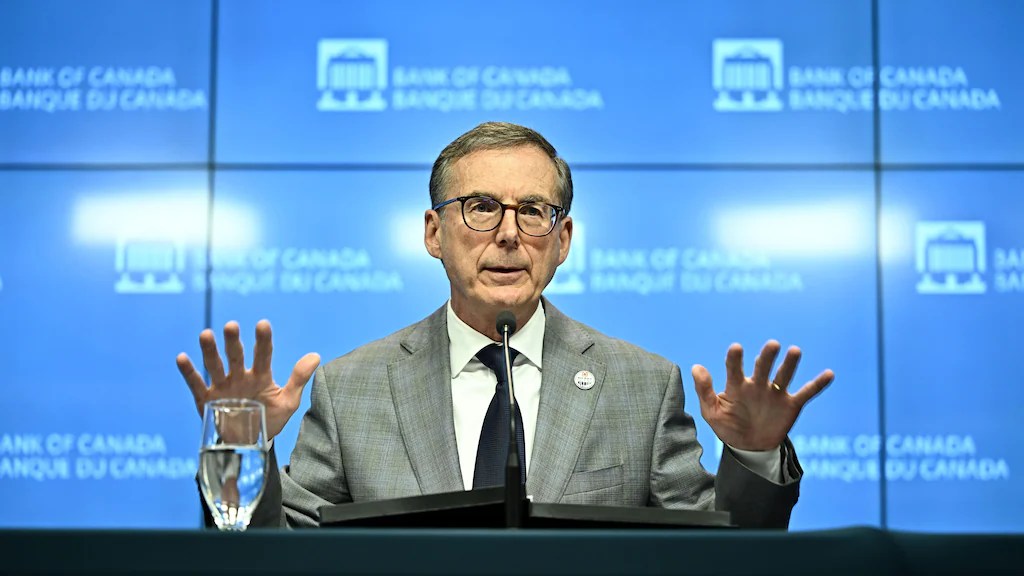
On December 11, 2024, the Bank of Canada made its second consecutive half-point rate cut, lowering the policy interest rate from 3.75% to 3.25%. This marks the fifth consecutive rate cut since June and signals a shift towards a more gradual approach to monetary easing.
In a statement, Governor Tiff Macklem emphasized that while inflation is now under control, with the Consumer Price Index (CPI) hovering around the Bank’s 2% target, economic uncertainty remains. This includes concerns about rising unemployment and potential impacts from U.S. trade policies.
What Does This Mean for the Housing Market in Canada?
For Canada’s housing market, the rate cut could provide a much-needed boost, especially for homebuyers. According to RE/MAX Canada president Christopher Alexander, the lower interest rates and new mortgage rules are likely to stimulate more activity in Canada’s real estate market, particularly among first-time buyers.
Starting December 15, 2024, Canadians will benefit from relaxed mortgage rules, allowing for smaller down payments on higher-priced homes and extended payment periods for first-time buyers, reducing monthly mortgage payments, though it may increase debt in the long run. Alexander noted, “First-time buyers have been waiting for these changes, and now they can make their moves, particularly with spring around the corner.”
However, while the lower rates are encouraging, the market is unlikely to see a return to the frenzy of the pandemic boom. Homebuyers will still face higher-than-usual mortgage rates compared to the pandemic years, and there’s more inventory on the market, giving buyers a bit more choice.
What’s Behind the Rate Cuts?
The Bank of Canada’s decision to cut rates is primarily due to weaker-than-expected economic growth. The unemployment rate recently climbed to 6.8%, the highest since January 2017, signaling potential slack in the economy. As Macklem explained in his press conference, the Bank’s goal is to boost economic growth while keeping inflation around 2%. “We want to see growth pick up to absorb the unused capacity in the economy,” he said.
Macklem also acknowledged the possibility of new U.S. tariffs on Canadian exports, which could add uncertainty to Canada’s economic outlook. This decision comes at a time when Canada is also facing weaker-than-expected GDP growth and rising costs due to global economic pressures.
What Does This Mean for Mortgage Rates?
As the Bank of Canada continues to cut rates, variable-rate mortgages are expected to become more affordable. For homeowners with a variable-rate mortgage, the lower interest rates could ease monthly payments, though some financial analysts, including Robert McLister of MortgageLogic.news, caution that many Canadians still remember the sharp rise in rates from 2022 to 2023 and may hesitate to embrace variable-rate products. McLister noted, “The trauma of the 4.75 percentage point increase is still too fresh in many borrower’s minds.”
Fixed-rate mortgages, however, remain slightly higher, with the average five-year fixed rate around 4.29% compared to the 5% average for variable mortgages. As rates continue to drop, the gap between these two types of mortgages may narrow, making variable-rate mortgages a more appealing option for some.
Future Outlook: What’s Next for Canada’s Economy?
As the Bank of Canada moves into a “more gradual” phase of rate cuts, analysts predict that future rate cuts will likely be smaller, with expectations of 25 basis point cuts over the coming months. For now, markets seem to believe that the era of large, 50 basis-point cuts is behind us.
However, analysts still forecast that the rate will eventually settle between 2.25% and 2.5%, meaning that there are likely a few more rate cuts on the horizon, but at a slower pace. The potential for further global economic instability, especially with the threat of U.S. tariffs and the continued fluctuation of the Canadian dollar, could also influence the Bank’s decisions in 2025.
Conclusion
The Bank of Canada’s recent decision to cut interest rates by 50 basis points provides a significant opportunity for Canada homebuyers, particularly first-time buyers, with lower monthly mortgage payments and a more favorable environment for securing loans. However, while the rate cut may revive some activity in the housing market, it is unlikely to spark the rapid growth seen during the pandemic years.
With continued economic uncertainty and global challenges ahead, the Bank of Canada’s cautious approach to future rate cuts reflects the need for careful monitoring of inflation and economic growth trends. As we move into 2025, homebuyers, homeowners, and real estate investors in Canada will need to keep a close eye on the Bank’s decisions and adjust their strategies accordingly.
Citations:
- Bank of Canada press release, December 11, 2024 Bank of Canada
- RE/MAX Canada President Christopher Alexander, December 2024 RE/MAX Canada
- MortgageLogic.news, Robert McLister MortgageLogic
- Bank of Canada interest rate decision official statement | Financial Post December 11, 2024 Financial Post
- Live updates: Bank of Canada delivers second straight half-point cut, bringing key interest rate to 3.25% – The Globe and Mail
 Canada Housing Market
Leave a comment