

For the first time since July 2021, Canadian rental prices have experienced a year-over-year decline. The October 2024 Rentals.ca Rent Report shows a 1.2% annual drop in average asking rents across Canada, with the national average now sitting at $2,152. The decline signals a potential shift in Canada’s rental market dynamics, especially in previously high-demand regions.
Major Cities See Declining Rents
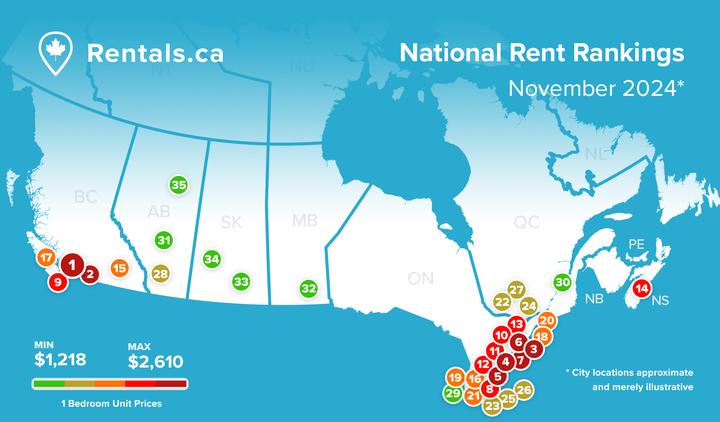
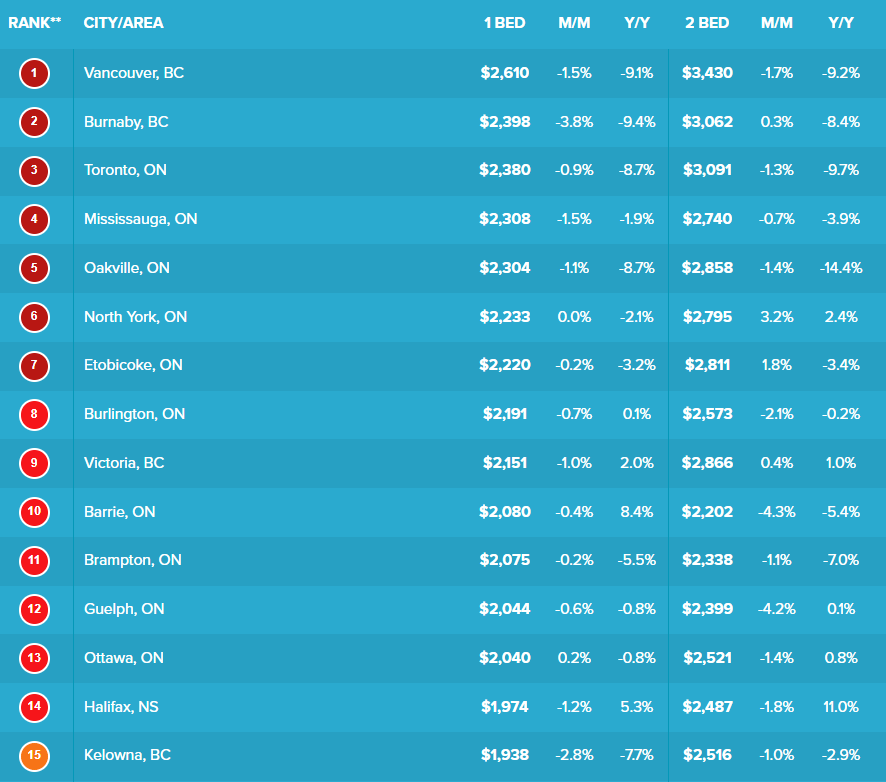
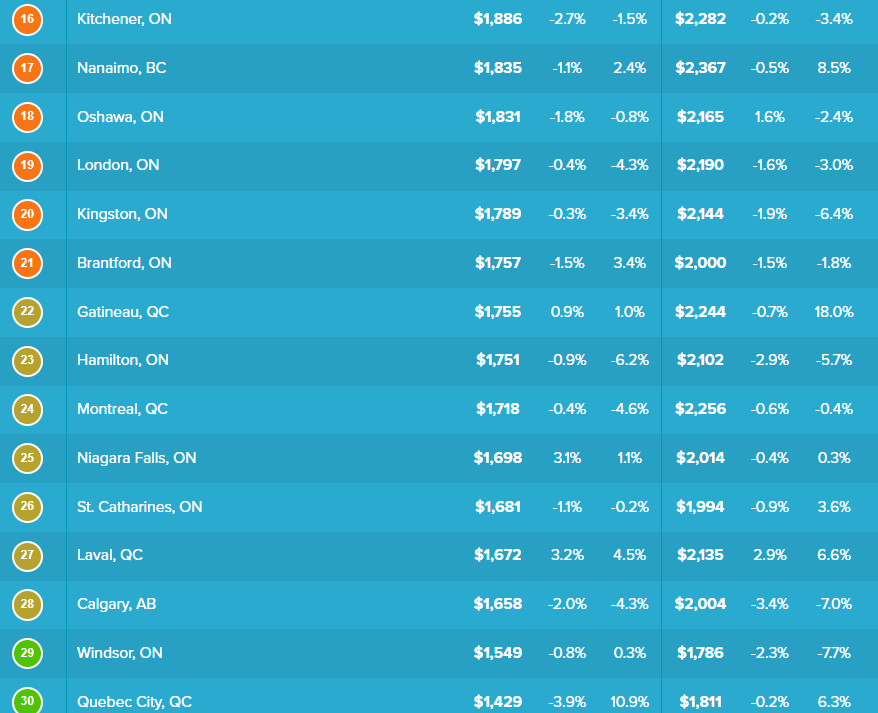
In some of Canada’s most expensive cities, including Vancouver, Toronto, and Montreal, rents have dropped notably. Vancouver leads with a 9.1% drop for one-bedroom apartments, averaging $2,610, and two-bedrooms down 9.2% to $3,430. Toronto follows with one-bedroom rents down 8.7% to $2,380 and two-bedrooms down 9.7% to $3,091. These drops reflect shifting demand and increased rental inventory, creating potential opportunities for renters in urban centers previously known for high rental costs.
Smaller Markets Show Strong Rent Growth
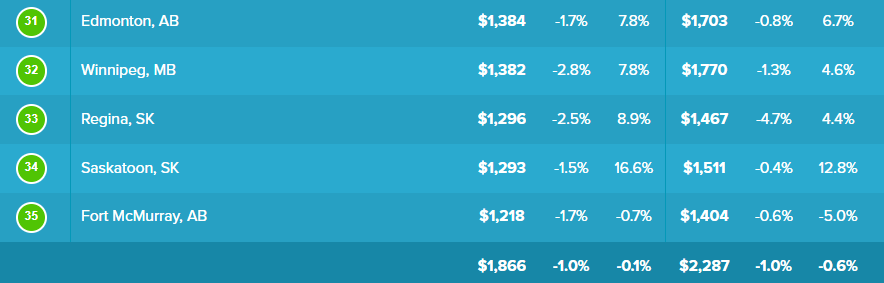
While the big cities are seeing declines, smaller and more affordable markets continue to record strong rental growth. Saskatchewan leads with a significant 17.1% annual increase in apartment rents, reaching $1,358. Nova Scotia also saw growth, with an annual rise of 9.6% to an average of $2,298, marking it as the third-highest average rent in the country. Alberta’s markets, such as Edmonton and Calgary, saw more moderate increases, with Edmonton rents up by 8.4% to an average of $1,584.
Condo and Apartment Trends
The report highlights that studio rents in purpose-built apartments saw a 7.4% increase, reaching an average of $1,622, while three-bedroom units rose by 7.5% to $2,673. In contrast, condo rents showed overall declines, especially in studios and one-bedroom units. The decline in condo prices may reflect an easing in demand as more Canadians turn to purpose-built rentals for cost savings.
Growing Popularity of Shared Accommodation
As the rental market adjusts, shared accommodation listings have surged, with a 58% year-over-year increase in availability. This trend provides an affordable alternative, especially in high-cost cities like Toronto and Vancouver. In Edmonton, shared accommodation rents rose by 7.3% to an average of $791, while Toronto’s shared rents decreased by 8.9% to $1,196, offering more flexibility for renters navigating tight budgets.
What This Means for Renters and Investors
The current rental trends suggest a rebalancing in Canada’s housing market, especially in large metropolitan areas. For renters, now might be an opportune time to find better rental deals in major cities. For real estate investors, these shifts highlight the potential in smaller, growing markets where rent prices continue to climb.
 Canada Housing Market
Leave a comment