

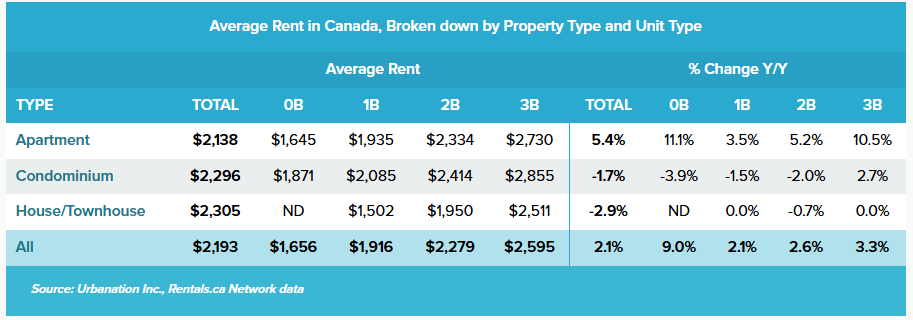
Rentals.ca just launched their October 2024 Rent Report and here’s everything you need to know. In September 2024, average asking rents across Canada for all residential property types saw a modest 2.1% increase year-over-year, reaching $2,193. This marks the smallest annual rent increase since October 2021, highlighting a slowdown in the rapid rent growth we’ve seen in recent years.
National Rental Trends for September 2024
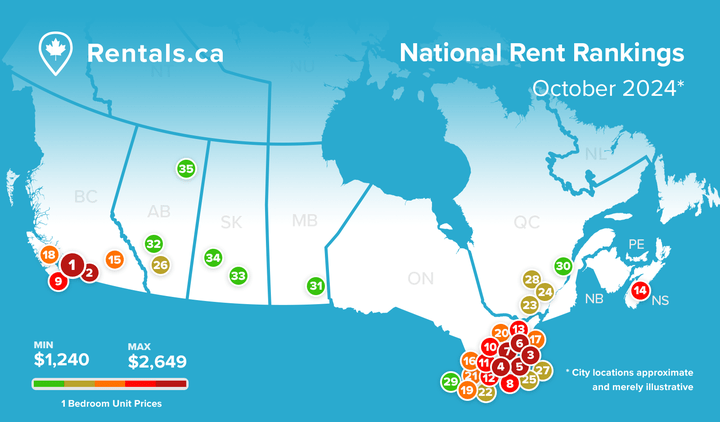
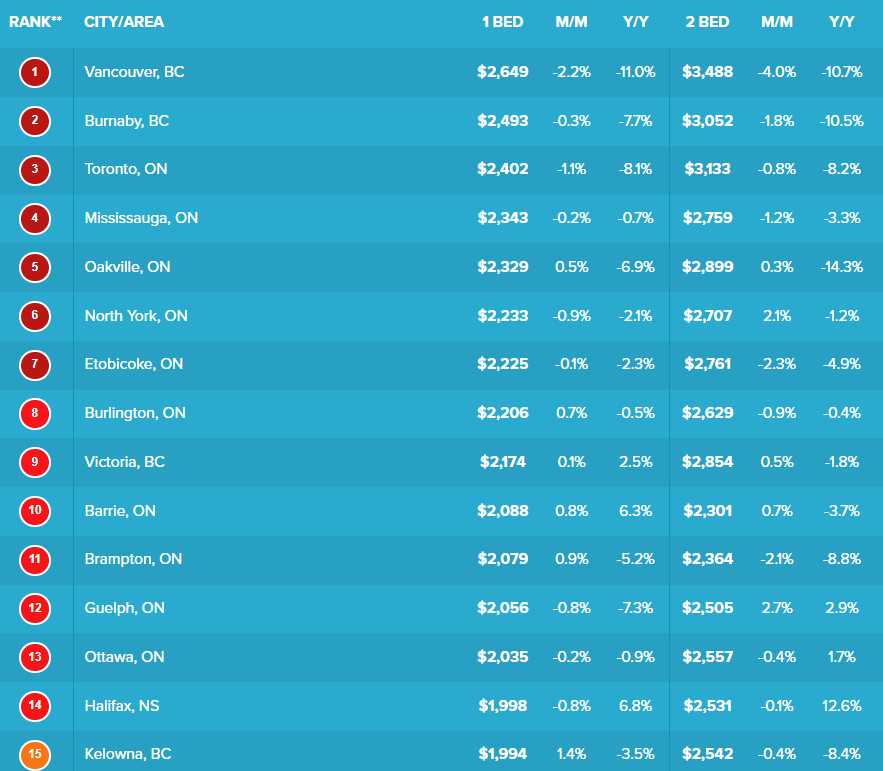
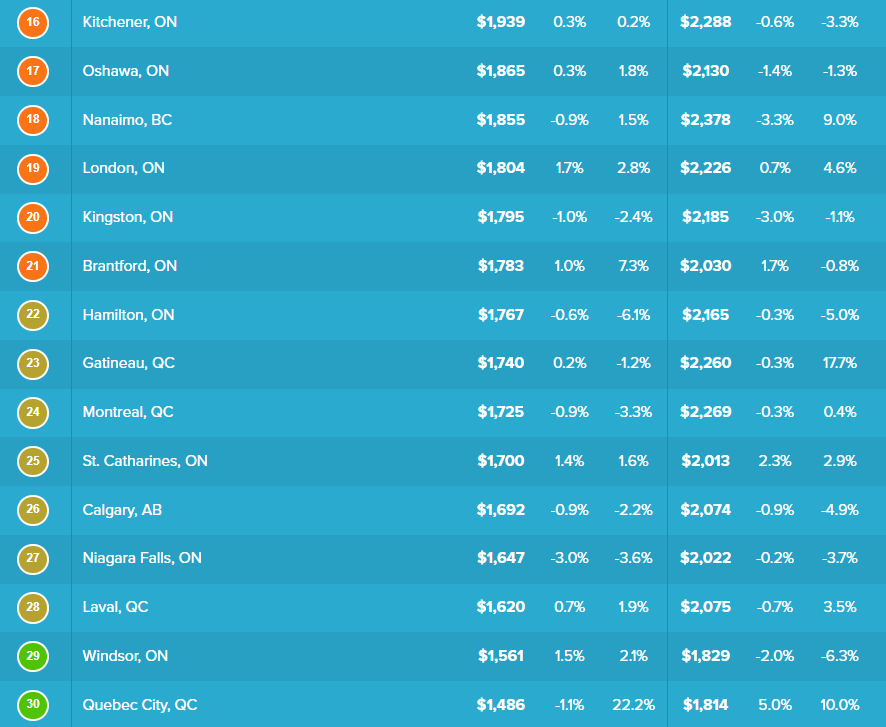
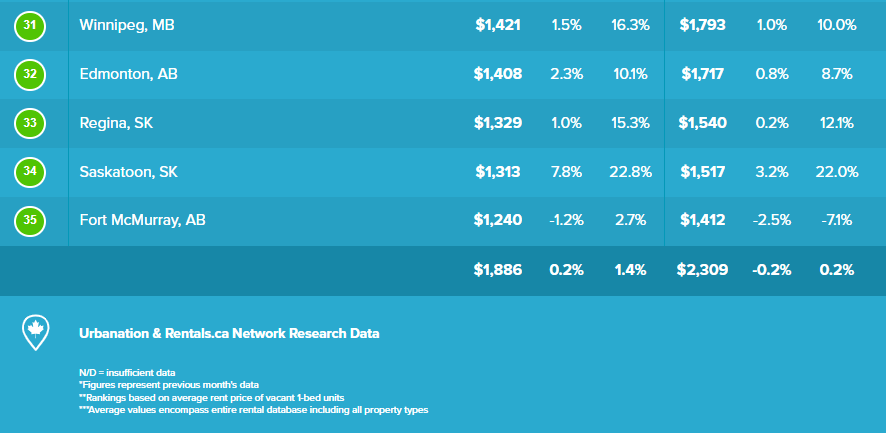
Vancouver continues to top the list of Canada’s most expensive cities, but rents there are on the decline. One-bedroom units in Vancouver saw a significant 11.0% year-over-year drop, bringing the average down to $2,649. Two-bedroom units followed suit with a 10.7% decrease, averaging $3,488. Other major cities like Burnaby, Toronto, and Mississauga also reported declines, reflecting a nationwide trend of cooling rental prices.
Here’s a quick snapshot of the top 5 most expensive cities for rent in September 2024:
- Vancouver, BC: 1-bed avg. $2,649 (-11.0% Y/Y), 2-bed avg. $3,488 (-10.7% Y/Y)
- Burnaby, BC: 1-bed avg. $2,493 (-7.7% Y/Y), 2-bed avg. $3,052 (-10.5% Y/Y)
- Toronto, ON: 1-bed avg. $2,402 (-8.1% Y/Y), 2-bed avg. $3,133 (-8.2% Y/Y)
- Mississauga, ON: 1-bed avg. $2,343 (-0.7% Y/Y), 2-bed avg. $2,759 (-3.3% Y/Y)
- Oakville, ON: 1-bed avg. $2,329 (-6.9% Y/Y), 2-bed avg. $2,899 (-14.3% Y/Y)
Rent Growth Slows Nationwide
Canada’s rental market has seen a consistent slowdown, with the annual rent growth rate dropping for the fifth consecutive month. Back in May, rents were increasing by over 9% year-over-year, but in September, that number shrank to just 2.1%. While rents have risen 13.4% compared to two years ago, the rapid growth has certainly tapered off, possibly due to reduced immigration inflows.
Condo Rents Decline, But Apartment Rents Rise
Condominium rentals took a hit, with average rents dropping by 1.7% in September to $2,296. Vancouver, Toronto, and Calgary saw some of the steepest declines, with Vancouver condo rents falling by a notable 13.6%. On the other hand, purpose-built apartment rents are still on the rise, up 5.4% year-over-year to an average of $2,138.
Smaller units, particularly studios, have seen the fastest rent growth, with an 11.1% increase to $1,645. Three-bedroom units also posted strong gains, with a 10.5% year-over-year rise to an average of $2,730.
Provincial and Municipal Insights
Ontario and British Columbia continue to dominate the rental landscape, but both provinces have seen rent decreases in key markets. Ontario’s apartment rents dropped 4.3% year-over-year, averaging $2,380, while B.C. saw a 3.2% decline, with rents averaging $2,570.
In contrast, provinces like Saskatchewan, Alberta, and Atlantic Canada are experiencing double-digit rent growth. Saskatchewan led the pack with a 23.5% increase, making it the fastest-growing rental market in the country. Cities like Saskatoon and Regina have seen rents surge by over 20%, reflecting high demand and limited supply in more affordable regions.
Shared Accommodations Gaining Popularity
As housing becomes more expensive, shared accommodations are becoming a more popular option. Across four provinces, shared accommodation rents rose 6.9% year-over-year, with Alberta leading the way at 8.8%. In major cities like Vancouver and Toronto, condo owners are increasingly subletting individual bedrooms to offset costs. Meanwhile, suburban areas like Brampton are seeing more basement apartments divided into smaller, affordable units.
Conclusion: What’s Ahead for Renters in 2024?
As we head into the final quarter of 2024, it’s clear that the rental market is shifting. While overall rent growth has slowed, affordability remains a challenge in Canada’s largest cities. The rise in shared accommodations and the growing popularity of mid-sized and smaller markets may provide some relief for renters. However, it’s crucial for prospective tenants to stay informed about these evolving trends.
Subscribe to our newsletter so you don’t miss out on important Ontario Housing Market updates:
Source + tables above from: Rent Growth in Canada Slows to 2% (rentals.ca)
 Canada Housing Market
Leave a comment