
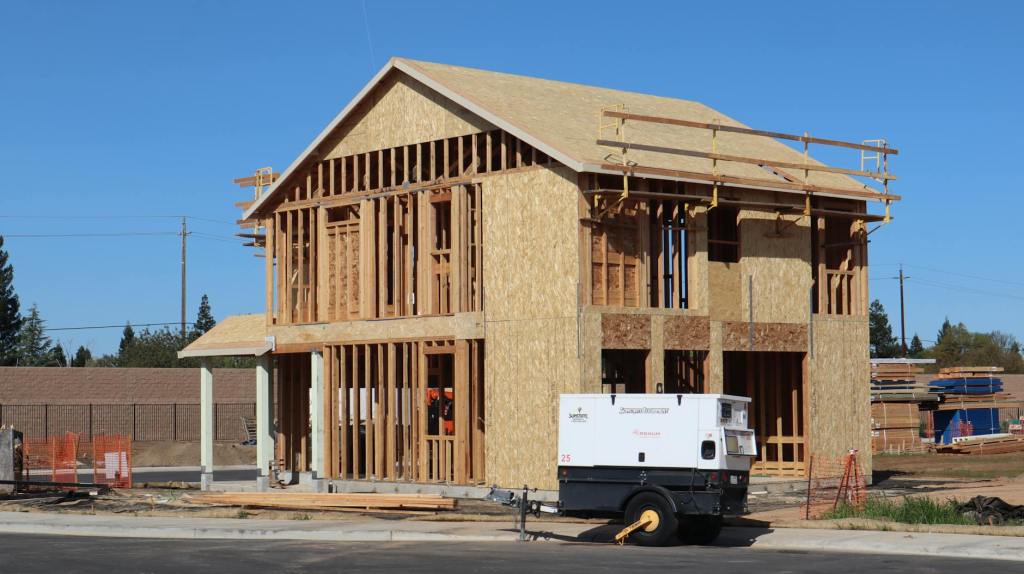
Ontario’s housing market is facing another setback.
New projections released alongside the province’s latest budget show that homebuilding expectations have been revised downward once again, raising further doubts about whether Ontario can meet its ambitious housing targets.
Housing Targets Continue to Slip
Back in 2022, the provincial government pledged to build 1.5 million homes by 2031 to address the housing crisis.
Now, that goal is looking increasingly out of reach.
According to updated forecasts, Ontario is expected to see 276,900 housing starts between 2025 and 2028, down more than 10 percent from the previous estimate of 315,000 units.
This marks the latest in a series of downward revisions, reflecting ongoing challenges in the housing sector.
Construction Activity Remains Weak
The slowdown in homebuilding is not limited to long-term projections.
Annual forecasts have also been reduced:
- 2025 housing starts revised down to 65,000
- 2026 projected at 64,800, down from 74,800
- 2027 expected at 70,300
- 2028 projected at 76,800
These figures highlight a construction sector that is struggling to gain momentum.
The province itself acknowledged that economic uncertainty is weighing heavily on homebuilding activity, with private-sector forecasts pointing to continued weakness throughout 2026.
Why the 1.5 Million Home Goal Looks Unlikely
To meet its original target, Ontario would need to significantly ramp up construction in the coming years.
Earlier plans required:
- Around 110,000 homes annually in the early years
- Increasing to 175,000 homes per year between 2026 and 2031
Based on current projections, the province is falling far short of those levels.
Even in its strongest projected years, housing starts remain well below what would be needed to close the gap.
Government Shifting Focus Away From Targets
Recent comments from provincial leaders suggest a shift in strategy.
Peter Bethlenfalvy has indicated that the government is no longer focused on hitting a specific housing target, instead emphasizing affordability measures.
Similarly, Doug Ford has encouraged buyers to take advantage of new incentives aimed at stimulating demand.
New Incentives Aim to Boost Housing Activity
In an effort to support the housing market, Ontario recently announced a temporary policy to waive HST on new homes for buyers.
The measure:
- Applies to a wide range of new construction purchases
- Is expected to cost approximately $1.4 billion
- Aims to encourage both buying and building activity
The government hopes this incentive will help revive demand and support new construction projects.
Resale Market Showing Signs of Recovery
While new construction is slowing, the resale market may offer some optimism.
According to projections:
- Home resales are expected to rise 9.1 percent in 2026
- Followed by steady growth through 2029
This anticipated rebound is driven by pent-up demand and improving economic conditions, although uncertainty remains a key factor.
What This Signals for Ontario’s Housing Market
Ontario’s housing sector is facing a complex mix of challenges.
Key takeaways:
- New home construction is slowing
- Housing targets are becoming less realistic
- Government focus is shifting toward affordability measures
- Resale activity may recover sooner than new builds
The gap between housing demand and supply is unlikely to close quickly, especially as economic uncertainty continues to impact both buyers and builders.
For now, Ontario’s housing market remains in a period of adjustment, with the path forward still unclear.
References
Callan, I., & D’Mello, C. (2026, March 26). Ontario’s battered housing sector revises its projections down again | Globalnews.ca
Government of Ontario. (2026). Ontario Budget 2026 housing projections.
 Canada Housing Market
Leave a comment