
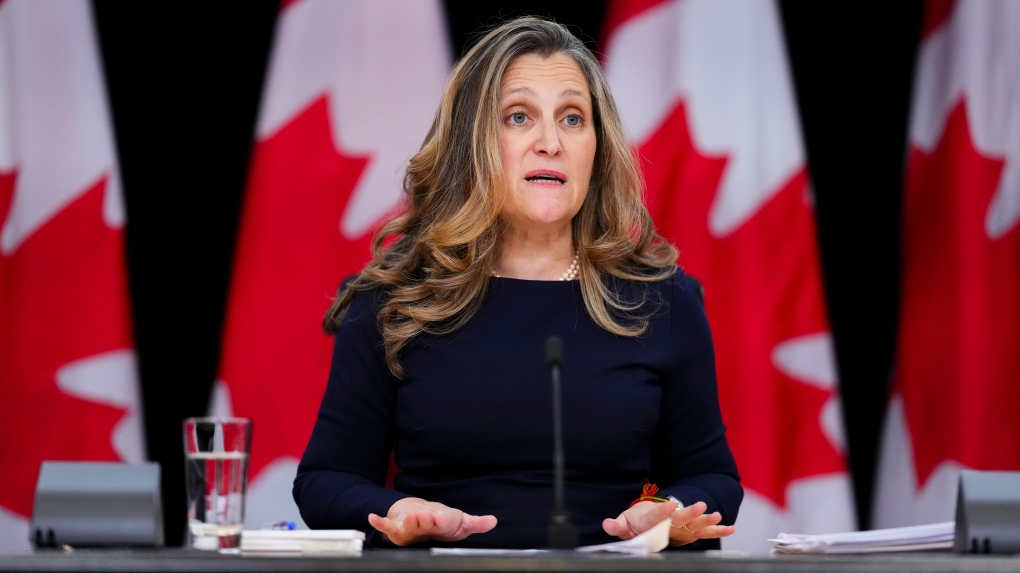
Canada’s federal government is rolling out a temporary GST holiday to address what Deputy Prime Minister and Minister of Finance Chrystia Freeland has called a “vibecession.” This two-month tax break aims to ease the financial strain on Canadians while boosting consumer confidence.
Starting December 14, the goods and services tax (GST) will be removed from a range of everyday items, including children’s clothing, shoes, toys, diapers, restaurant meals, beer and wine, Christmas trees, snack foods, beverages, and even video game consoles. The initiative, along with $250 cheques for eligible Canadians in the spring, is estimated to cost the government $6.3 billion.
Bridging the Gap Between Perception and Reality
Despite declining inflation rates and falling interest rates, Canadians continue to feel the squeeze of higher prices. Freeland explained in a press conference that the GST holiday is meant to address this disconnect between improving economic indicators and how Canadians perceive their financial reality.
“One of the positive impacts of this measure is to help Canadians get past that vibecession because how Canadians feel really does have a real economic impact,” Freeland said.
Cheques for Eligible Canadians
In addition to the tax break, the federal government will distribute $250 cheques to Canadians earning up to $150,000 who were employed in 2023. Prime Minister Justin Trudeau stated last week that while the government cannot directly control prices at the checkout, it can implement measures to put money back into Canadians’ pockets.
Mixed Reactions from Economists
While the GST holiday and cash benefits aim to stimulate spending, many economists remain skeptical. They argue that the measures are short-term solutions that do little to address deeper issues like productivity and long-term economic growth.
BMO senior economist Robert Kavcic estimates the stimulus will contribute 0.3% to GDP growth but notes that permanent income tax cuts or investments in productivity might have offered more substantial benefits.
Procurement Minister Jean-Yves Duclos, a former economics professor, defended the measures, emphasizing their temporary nature. “Despite all the wonderful economic news that my colleagues, economists, are correct to spread, the average Canadian doesn’t yet feel that good news,” Duclos said.
What’s Next?
The GST holiday and cash benefits are intended to provide immediate relief during the holiday season while sparking consumer spending. Whether these measures will have a lasting impact on Canada’s economy remains a topic of debate among economists and policymakers.
Source: GST holiday is meant to tackle the ‘vibecession’: Freeland | CTV News
 Canada Housing Market
Leave a comment